
The Implementation of Roy’s Adaptation Model in the Stroke Unit: A Qualitative Phenomenological Study
DOI:
https://doi.org/10.51143/jksi.v11i1.920Keywords:
Roy’s Adaptation Stroke Satisfaction NursingAbstract
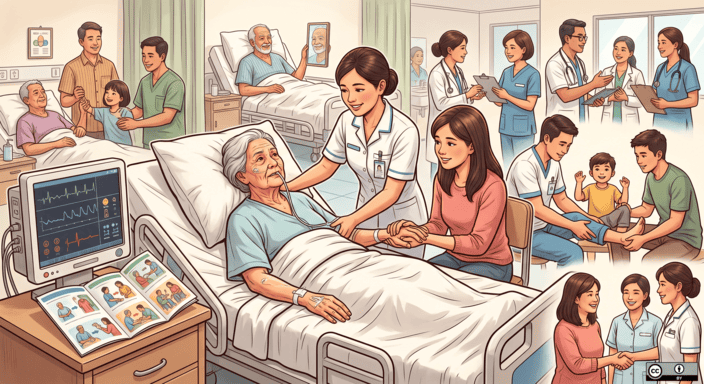
Inability to adapt post-stroke significantly reduces a patient’s quality of life and healthcare satisfaction, necessitating holistic conceptual frameworks like Roy’s Adaptation Model (RAM) to support the recovery process. This study explored the implementation of RAM in supporting patient adaptation and its contribution to healthcare satisfaction within a stroke care unit. Employing a qualitative phenomenological design, data were gathered through in-depth interviews with nurses and supplemented by direct observations and triangulation with ward heads and patients' families. Thematic analysis revealed five major themes: (1) physiological adaptation via routine monitoring and multidisciplinary collaboration; (2) self-concept adaptation through empathy and psychosocial reinforcement; (3) role function adaptation via patient empowerment and family involvement; (4) interdependence adaptation through active family participation during recovery; and (5) enhanced patient and family satisfaction driven by therapeutic communication, continuous education, and holistic support. These findings suggest that RAM provides a valuable, structured framework for facilitating stroke adaptation, and its implementation in holistic nursing care contributes significantly to improving patient and family satisfaction with clinical services.
References
Baequny, A., Sudirman, Hidayati, S., Pratikwo, S., & Hiimawan, F. (2020). Pelatihan Intervensi Adaptasi Fisiologis untuk Meningkatkan Kemandirian Pasien paska Stroke. Abdimas Polsaka: Jurnal Pengabdian Masyarakat Sandi Karsa, 4(02), 274–283. https://journal.uwgm.ac.id
Callis, A. M. (2020). Application of the Roy Adaptation Theory to a care program for nurses. Applied Nursing Research, 56(August), 151340. https://doi.org/10.1016/j.apnr.2020.151340
Candan, H. D., Do?an, S., Güler, C., & Carroll, K. (2022). Roy Adaptation Model: Theory-Based Knowledge and Nursing Care With a Person Experiencing COVID-19. Nursing Science Quarterly, 35(3), 304–310. https://doi.org/10.1177/08943184221092434
Chun, H. Y. Y., Ford, A., Kutlubaev, M. A., Almeida, O. P., & Mead, G. E. (2022). Depression, Anxiety, and Suicide After Stroke: A Narrative Review of the Best Available Evidence. Stroke, 53(4), 1402–1410. https://doi.org/10.1161/STROKEAHA.121.035499
Dharma, K.-K., & Rahayu, H. (2022). The effective post-stroke adaptation behavior model requires a family support system. Enfermeria clinica, 32(2), 123–130. https://doi.org/10.1016/j.enfcle.2020.11.006
Dharma, K. K., Parellangi, A., & Rahayu, H. (2021). Studi Efektifitas Pembiayaan Itervensi Model Adaptasi Berbasis Pemberdayaan Keluarga Untuk Meningkatkan Kualitas Hidup Pasca Stroke. Dunia Keperawatan: Jurnal Keperawatan Dan Kesehatan, 8(2), 208. https://doi.org/10.20527/dk.v8i2.8331
Hosseini, M., & Soltanian, M. (2022). Application of Roy’s Adaptation Model in Clinical Nursing: A Systematic Review. Journal of Iranian Medical Council, 5(4), 540–556. https://doi.org/10.18502/jimc.v5i4.11327
Jiang, S., Xu, X., Tong, X., Jin, H., & Chen, T. (2020). The effect of rehabilitation nursing based on Roy’s adaptation theory on the prognoses of acute cerebral infarct patients after intravascular intervention. Int J Clin Exp Med, 13(3), 1650–1659. www.ijcem.com/
Kariasa, I. M. (2022). Penerapan Teori Roy Dalam Meningkatkan Asuhan Keperawatan Pada Pasien Stroke Iskemia Berulang. Jurnal Endurance, 7(1). https://doi.org/https://doi.org/10.22216/jen.v7i1.826
Kemenkes RI. (2025). Profil Indonesia Sehat. Kementerian Kesehatan Republik Indonesia. https://www.kemenkes.go.id
Khaerunnisa, M., Sumarni, N., & Mulya, A. P. (2024). Asuhan Keperawatan Keluarga dengan Pasien Pascastroke Menggunakan Pendekatan Model Adaptasi Roy: Studi Kasus. Ilmiah Keperawatan, 8(2), 92–102.
Kim, J., & Kim, H. (2023). A Structural Equation Model on Social Re-Adjustment of Stroke Patients: Based on Roy’s Adaptation Model. Journal of Korean Academy of Nursing, 53(4), 480–495. https://doi.org/10.4040/jkan.22140
Kumar, S., Jan, R., Rattani, S., & Yaqoob, A. (2022). Theory Guided Practices: An Approach to Better Nursing Care through Roy Adaptation Model. International Journal of Current Research and Review, 14(14), 58–63. https://doi.org/10.31782/ijcrr.2022.141410
Kusuma, A. H., Pudjonarko, D., & Sujianto, U. (2024). The Influence of Spiritual Care with Callista Roy’s Adaptation Theory Approach on Serotonin Levels in Ischemic Stroke Patients. Jurnal Keperawatan Global, 9(2), 84–93.
Liu, L., Xu, M., Marshall, I. J., Wolfe, C. DA, Wang, Y., & Connell, M. D. (2023). Prevalence and natural history of depression after stroke: A systematic review and meta-analysis of observational studies. PLoS Medicine, 20(3), 1–21. https://doi.org/10.1371/JOURNAL.PMED.1004200
Mawikere, Y., Manampiring, A. E., & Toar, J. M. (2021). Hubungan Beban Kerja Perawat Dengan Tingkat Kepuasan Pasien Dalam Pemberian Asuhan Keperawatan Di Ruang Rawat Inap Rsu Gmim Pancaran Kasih Manado. Jurnal Keperawatan, 9(1), 71. https://doi.org/10.35790/jkp.v9i1.36771
Mendrofa, F. A. M. (2020). Disertasi Pengembangan Model Kemandirian Asuhan Keperawatan Restoratif berbasis self care pada penderita stroke iskemik [Universitas Airlangga]. http://eprints.unkaha.ac.id/100/
Mone, B., Agustine, U., Belarminus, P., & Santoso, S. D. R. P. (2023). Pemenuhan Kebutuhan Psikososial (Ketidakberdayaan) pada Pasien Stroke di Ruang Interna Rumah Sakit Umum Daerah Waikabubak Kabupaten Sumba Barat. Jurnal Keperawatan Sumba (JKS), 2(1), 21–31. https://doi.org/10.31965/jks.v2i1.1294
Pardede, J. A. (2021). Teori Dan Model Adaptasi Sister Calista Roy?: Pendekatan Keperawatan. Jurnal Ilmiah Kesehatan, 2(November 2014), 18. https://www.researchgate.net/profile/Jek-Amidos/publication/347208243
Putri, M. E., Rahardiantini, I., & Saputry, E. (2022). Pemberian Asuhan Keperawatan Secara Holistik pada Pasien dengan Gangguan Sistem Neurologi?: Stroke. Jurnal Keperawatan, 12(1), 8–16. https://doi.org/10.59870/jurkep.v12i1.125
Roy, C. (2021). The Roy Adaptation Model: The definitive statement. McGraw- Hill/Appleton & Lange.
Smeltzer, S. C., & Bare, B. G. (2021). Buku Ajar Keperawatan Medikal Bedah (6th ed.). EGC.
Susanti, P., & Yulistiani, M. (2024). Hubungan komunikasi terapeutik perawat dengan kepuasan pasien stroke non haemorragic di klinik neurobehavior RSUD Prof. Dr. Margono Soekarjo Purwokerto. Jurnal Keperawatan Mersi, 13, 68–74. https://doi.org/10.31983/jkm.v13i2.12284
Syamsidar, Asmaningrum, N., & Rondhianto. (2023). Implementation of calista roy’s adaptation implementation model in health care settings: a scoping review. The 6th International Agronursing Conference Innovating Nursing In The Digital Age: Enhancing Education, Research, and Practice Faculty of Nursing, University of Jember, Indonesia, 232–253.
Wijaya, Y. A., Yudhawati, N. L. P. S., & Ilmy, S. K. (2022). Development of Nursing Concept and Theory Model?: Differences and Identification of Nursing Theory Group Between Theory, Grand Theories, Middle Range Theory and Nursing Practice Theory. Sain Keperawatan, 1(14), 1–22. https://doi.org/10.13140/RG.2.2.16470.11844
World Health Organization (WHO). (2023). Global Report; Stroke Attack. World Health Organization. http://www.who.int/publication
Ye?ilyurt, K. Ö. (2023). The Effect of Roy Adaptation Model on the Adaptation Status of Patients after Surgical Intervention. Journal of Education and Research in Nursing, 20(3), 277–283. https://doi.org/10.14744/jern.2021.21246
Yuniarti, I. I., & Kariasa, I. M. (2020). Peran Keluarga Terhadap Self Management Pasien Pasca Stroke: Literature Review. Dunia Keperawatan: Jurnal Keperawatan Dan Kesehatan, 8(3), 452. https://doi.org/10.20527/dk.v8i3.8256
Zhang, W., Gao, Y. J., Ye, M. M., & Zhou, L. S. (2024). Post-stroke family resilience is correlated with family functioning among stroke survivors: The mediating role of patient’s coping and self-efficacy. Nursing Open, 11(7), 1–8. https://doi.org/10.1002/nop2.2230
Downloads
Published
How to Cite
Issue
Section
License
Copyright (c) 2026 Eriyana, Fery Agusman, Any Rosiana M

This work is licensed under a Creative Commons Attribution 4.0 International License.
Authors who publish with Jurnal Keperawatan Suaka Insan (JKSI) agree to the following terms:
1) Authors retain copyright and grant Jurnal Keperawatan Suaka Insan (JKSI) right of first publication with the work simultaneously licensed under a Creative Commons Attribution License CC BY that allows others to remix, adapt, and build upon the work with an acknowledgment of the work’s authorship and initial publication in this journal.
2) Authors are able to enter into separate, additional contractual arrangements for the non-exclusive distribution of the journal’s published version of the work (e.g., submit it to an institutional repository or publish it in a book), with an acknowledgment of its initial publication in this journal.
3)Authors are permitted and encouraged to post their work online (e.g., in institutional repositories or on their website) prior to and during the submission process, as this can lead to productive exchanges, as well as earlier and greater citation of published work (see the discussion about The Effect of Open Access).
References
Baequny, A., Sudirman, Hidayati, S., Pratikwo, S., & Hiimawan, F. (2020). Pelatihan Intervensi Adaptasi Fisiologis untuk Meningkatkan Kemandirian Pasien paska Stroke. Abdimas Polsaka: Jurnal Pengabdian Masyarakat Sandi Karsa, 4(02), 274–283. https://journal.uwgm.ac.id
Callis, A. M. (2020). Application of the Roy Adaptation Theory to a care program for nurses. Applied Nursing Research, 56(August), 151340. https://doi.org/10.1016/j.apnr.2020.151340
Candan, H. D., Do?an, S., Güler, C., & Carroll, K. (2022). Roy Adaptation Model: Theory-Based Knowledge and Nursing Care With a Person Experiencing COVID-19. Nursing Science Quarterly, 35(3), 304–310. https://doi.org/10.1177/08943184221092434
Chun, H. Y. Y., Ford, A., Kutlubaev, M. A., Almeida, O. P., & Mead, G. E. (2022). Depression, Anxiety, and Suicide After Stroke: A Narrative Review of the Best Available Evidence. Stroke, 53(4), 1402–1410. https://doi.org/10.1161/STROKEAHA.121.035499
Dharma, K.-K., & Rahayu, H. (2022). The effective post-stroke adaptation behavior model requires a family support system. Enfermeria clinica, 32(2), 123–130. https://doi.org/10.1016/j.enfcle.2020.11.006
Dharma, K. K., Parellangi, A., & Rahayu, H. (2021). Studi Efektifitas Pembiayaan Itervensi Model Adaptasi Berbasis Pemberdayaan Keluarga Untuk Meningkatkan Kualitas Hidup Pasca Stroke. Dunia Keperawatan: Jurnal Keperawatan Dan Kesehatan, 8(2), 208. https://doi.org/10.20527/dk.v8i2.8331
Hosseini, M., & Soltanian, M. (2022). Application of Roy’s Adaptation Model in Clinical Nursing: A Systematic Review. Journal of Iranian Medical Council, 5(4), 540–556. https://doi.org/10.18502/jimc.v5i4.11327
Jiang, S., Xu, X., Tong, X., Jin, H., & Chen, T. (2020). The effect of rehabilitation nursing based on Roy’s adaptation theory on the prognoses of acute cerebral infarct patients after intravascular intervention. Int J Clin Exp Med, 13(3), 1650–1659. www.ijcem.com/
Kariasa, I. M. (2022). Penerapan Teori Roy Dalam Meningkatkan Asuhan Keperawatan Pada Pasien Stroke Iskemia Berulang. Jurnal Endurance, 7(1). https://doi.org/https://doi.org/10.22216/jen.v7i1.826
Kemenkes RI. (2025). Profil Indonesia Sehat. Kementerian Kesehatan Republik Indonesia. https://www.kemenkes.go.id
Khaerunnisa, M., Sumarni, N., & Mulya, A. P. (2024). Asuhan Keperawatan Keluarga dengan Pasien Pascastroke Menggunakan Pendekatan Model Adaptasi Roy: Studi Kasus. Ilmiah Keperawatan, 8(2), 92–102.
Kim, J., & Kim, H. (2023). A Structural Equation Model on Social Re-Adjustment of Stroke Patients: Based on Roy’s Adaptation Model. Journal of Korean Academy of Nursing, 53(4), 480–495. https://doi.org/10.4040/jkan.22140
Kumar, S., Jan, R., Rattani, S., & Yaqoob, A. (2022). Theory Guided Practices: An Approach to Better Nursing Care through Roy Adaptation Model. International Journal of Current Research and Review, 14(14), 58–63. https://doi.org/10.31782/ijcrr.2022.141410
Kusuma, A. H., Pudjonarko, D., & Sujianto, U. (2024). The Influence of Spiritual Care with Callista Roy’s Adaptation Theory Approach on Serotonin Levels in Ischemic Stroke Patients. Jurnal Keperawatan Global, 9(2), 84–93.
Liu, L., Xu, M., Marshall, I. J., Wolfe, C. DA, Wang, Y., & Connell, M. D. (2023). Prevalence and natural history of depression after stroke: A systematic review and meta-analysis of observational studies. PLoS Medicine, 20(3), 1–21. https://doi.org/10.1371/JOURNAL.PMED.1004200
Mawikere, Y., Manampiring, A. E., & Toar, J. M. (2021). Hubungan Beban Kerja Perawat Dengan Tingkat Kepuasan Pasien Dalam Pemberian Asuhan Keperawatan Di Ruang Rawat Inap Rsu Gmim Pancaran Kasih Manado. Jurnal Keperawatan, 9(1), 71. https://doi.org/10.35790/jkp.v9i1.36771
Mendrofa, F. A. M. (2020). Disertasi Pengembangan Model Kemandirian Asuhan Keperawatan Restoratif berbasis self care pada penderita stroke iskemik [Universitas Airlangga]. http://eprints.unkaha.ac.id/100/
Mone, B., Agustine, U., Belarminus, P., & Santoso, S. D. R. P. (2023). Pemenuhan Kebutuhan Psikososial (Ketidakberdayaan) pada Pasien Stroke di Ruang Interna Rumah Sakit Umum Daerah Waikabubak Kabupaten Sumba Barat. Jurnal Keperawatan Sumba (JKS), 2(1), 21–31. https://doi.org/10.31965/jks.v2i1.1294
Pardede, J. A. (2021). Teori Dan Model Adaptasi Sister Calista Roy?: Pendekatan Keperawatan. Jurnal Ilmiah Kesehatan, 2(November 2014), 18. https://www.researchgate.net/profile/Jek-Amidos/publication/347208243
Putri, M. E., Rahardiantini, I., & Saputry, E. (2022). Pemberian Asuhan Keperawatan Secara Holistik pada Pasien dengan Gangguan Sistem Neurologi?: Stroke. Jurnal Keperawatan, 12(1), 8–16. https://doi.org/10.59870/jurkep.v12i1.125
Roy, C. (2021). The Roy Adaptation Model: The definitive statement. McGraw- Hill/Appleton & Lange.
Smeltzer, S. C., & Bare, B. G. (2021). Buku Ajar Keperawatan Medikal Bedah (6th ed.). EGC.
Susanti, P., & Yulistiani, M. (2024). Hubungan komunikasi terapeutik perawat dengan kepuasan pasien stroke non haemorragic di klinik neurobehavior RSUD Prof. Dr. Margono Soekarjo Purwokerto. Jurnal Keperawatan Mersi, 13, 68–74. https://doi.org/10.31983/jkm.v13i2.12284
Syamsidar, Asmaningrum, N., & Rondhianto. (2023). Implementation of calista roy’s adaptation implementation model in health care settings: a scoping review. The 6th International Agronursing Conference Innovating Nursing In The Digital Age: Enhancing Education, Research, and Practice Faculty of Nursing, University of Jember, Indonesia, 232–253.
Wijaya, Y. A., Yudhawati, N. L. P. S., & Ilmy, S. K. (2022). Development of Nursing Concept and Theory Model?: Differences and Identification of Nursing Theory Group Between Theory, Grand Theories, Middle Range Theory and Nursing Practice Theory. Sain Keperawatan, 1(14), 1–22. https://doi.org/10.13140/RG.2.2.16470.11844
World Health Organization (WHO). (2023). Global Report; Stroke Attack. World Health Organization. http://www.who.int/publication
Ye?ilyurt, K. Ö. (2023). The Effect of Roy Adaptation Model on the Adaptation Status of Patients after Surgical Intervention. Journal of Education and Research in Nursing, 20(3), 277–283. https://doi.org/10.14744/jern.2021.21246
Yuniarti, I. I., & Kariasa, I. M. (2020). Peran Keluarga Terhadap Self Management Pasien Pasca Stroke: Literature Review. Dunia Keperawatan: Jurnal Keperawatan Dan Kesehatan, 8(3), 452. https://doi.org/10.20527/dk.v8i3.8256
Zhang, W., Gao, Y. J., Ye, M. M., & Zhou, L. S. (2024). Post-stroke family resilience is correlated with family functioning among stroke survivors: The mediating role of patient’s coping and self-efficacy. Nursing Open, 11(7), 1–8. https://doi.org/10.1002/nop2.2230