The Relationship Between Family Support and Eating Independence Among Children with Intellectual Disabilities
DOI:
https://doi.org/10.51143/jksi.v11i1.1144Keywords:
Children , Eating Activities, Eating Independence, Family Support, Intellectual DisabilitiesAbstract
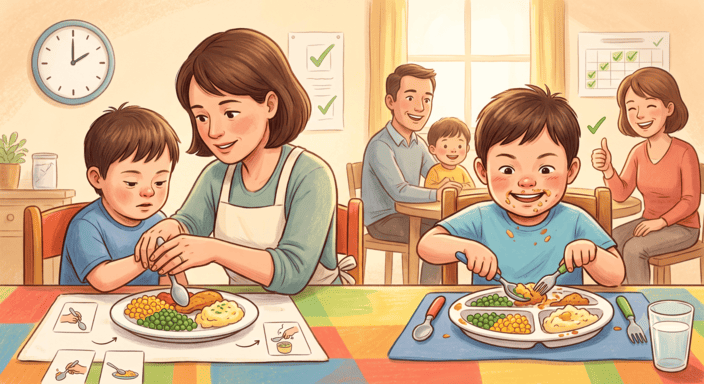
Children with intellectual disabilities have limitations in intellectual function and adaptive behavior, influencing their daily activities, including their ability to eat independently. To improve this skill, children need support from their parents so they can practice consistently and gradually. If family support is limited, children will become dependent on others and struggle to eat on their own. This study aims to analyse the relationship between family support and independent eating in children with intellectual disabilities. Using a quantitative analytic observational study with a cross-sectional design and total sampling technique, involving 40 children with intellectual disabilities at SLB Bina Sejahtera. Data were collected using validated and reliable questionnaires and observation checklists and analyzed using the Chi-Square test. The results indicated that among the 24 respondents (60.0%) providing good family support, 20 children (74.1%) ate independently, whereas 4 children (30.8%) did not. The analysis indicates a significant relationship between family support and eating independence, with a p-value of 0.023 (< 0.05). In conclusion, family support has a significant relationship with eating independence in children with intellectual disabilities. Therefore, active and consistent family involvement through guidance and independence training is important to improve the child’s quality of life, particularly regarding daily independence, including eating activities.
References
Ananta, R., Suryani, D., & Wicaksono, T. (2021). Klasifikasi tunagrahita dan implikasinya terhadap keterampilan bina diri anak. Jurnal Pendidikan Luar Biasa, 15(1), 45–53.
Elizabeth, B., Wanda, D., & Apriyanti, E. (2021). The correlation between sleep quality and the prevalence of obesity in school-age children. Journal of Public Health Research, 10(1_suppl), jphr-2021.
Hasugian, D. M (2024). Bina Diri Pada Anak Berkebutuhan Khusus (Tunagrahita) Di Slb-C Santa Lusia Medan Tahun 2024 Bina Diri Pada Anak Berkebutuhan Khusus ( Tunagrahita ) Di Slb-C Santa Lusia Medan Tahun 2024.
Indahwati, S., Haeriyah, S., & Ratnasari, F. (2022). Hubungan Dukungan Keluarga dengan Kemandirian dalam Kehidupan Sehari-hari Anak Tunagrahita di Sekolah Khusus YKDW 01 Karawaci Tangerang. Nusantara Hasana Journal, 1(9), 59-64.
Jacob, U. S., & Pillay, J. (2025). Parental age and gender influence on knowledge and perceptions of inclusive education for children with intellectual disabilities. Journal of Intellectual Disability — Diagnosis and Treatment.
Kadang, Y., Irnawan, S. M., Utami, D. L., Pratiwi, R., Syamsul, E. S., Siregar, R. U. P., Adimuntja, N. P., & Adityaningrum, A. (2025). Biostatistik Kesehatan. CV Eureka Media Aksara.
Kurniawan, A., Handayani, S., & Prasetyo, B. (2022). Faktor-faktor yang memengaruhi kemandirian aktivitas sehari-hari pada anak tunagrahita. Jurnal Pendidikan Luar Biasa, 16(2), 101–110. https://doi.org/10.7454/jplb.v16i2.2022.
Miller, J. A., Thompson, L., & Rogers, K. (2021). Adaptive behavior outcomes in children with moderate to severe intellectual disability: The role of family support. Journal of Developmental Disabilities, 27(3), 155–164. https://doi.org/10.1352/jdd.v27i3.2021.
Nurrohmi, S. (2020). Hubungan dukungan keluarga dengan kemandirian aktivitas sehari-hari pada anak tunagrahita di Sekolah Luar Biasa. Jurnal Keperawatan dan Kesehatan Masyarakat, 9(2), 123–130.
Nurwahyuliningsih, N., et al. (2025). Dukungan sosial dalam kesehatan dan keperawatan. Jakarta: Penerbit Buku Kesehatan.
Oktaviani, R., & Putri, A. (2025). Pola pengasuhan keluarga dan kemandirian makan anak tunagrahita. Jurnal Kesehatan Anak dan Perkembangan, 12(1), 44–53.
Parulian, K. R., Supriyanti, S. I., & Supardi, S. (2020). Hubungan Karakteristik Anak, Dukungan Keluarga Dengan Kemandirian Personal Hygiene Anak Tunagrahita. Carolus Journal of Nursing, 2(2), 177–188. https://doi.org/10.37480/cjon.v2i2.42.
Putri, P. Y. D., Puspita, A., & Mitra, D. S. (2025). Hubungan dukungan keluarga dengan kemandirian personal hygiene pada anak tunagrahita di Sekolah Luar Biasa Negeri (SLBN) 1 Palangka Raya. Journal of Nursing Invention, 6(2), 168–175.
Pokhrel, R. (2024). Supporting independence development in children with special needs through collaborative education and family involvement. Journal of Special Education Studies.
Rahmatullah., Kismawiyati, R., Megaswarie, R. N. (2025). Program Intervensi Dini dalam Melatih Bina Diri Anak Disabilitas Intelektual Ringan. Journal of Elementary School (JOES), 8(2). https://doi.org/10.31539/xh6hkz8.
Rahmawati, I. D., Ayu, M., Salmiah, J., & Andriani, O. (2023). Karakteristik dan klasifikasi anak berkebutuhan khusus secara akademik. Jurnal Pendidikan Vokasi dan Seni, 2(2). https://doi.org/10.52060/jpvs.v2i2.2017.
Rukmana, A. T., & Mariyati, L. I. (2024). Dukungan Keluarga dan Ketangguhan Ibu dengan Anak Berkebutuhan Khusus di Cita Hati Bunda. Journal of Islamic Psychology, 1(1), 10. https://doi.org/10.47134/islamicpsychology.v1i1.51.
Salsabila, S. A. (2023). Hubungan dukungan keluarga dengan kemandirian oral hygiene pada anak berkebutuhan khusus di SDLB Kota Surabaya. Jurnal Keperawatan Anak, 12(1), 70–78.
Sari, D. P., & Putri, A. L. (2023). Peran orang tua dalam kemandirian anak berkebutuhan khusus. Jurnal Paud, 27(2), 123-135. https://doi.org/10.21831/paud.v27i2.19485.
Sartika, A., & Kadar, M. (2021). Hubungan tingkat kepatuhan dan dukungan keluarga terhadap keberhasilan terapi ARV pada penderita HIV/AIDS di Klinik VCT RSUD Bayu Asih Purwakarta Tahun 2021 (Skripsi). Universitas Medika Suherman.
Schalock, R. L., Luckasson, R., & Tassé, M. J. (2021). Intellectual disability: Definition, diagnosis, classification, and systems of supports (12th ed.). Washington, DC: American Association on Intellectual and Developmental Disabilities (AAIDD).
Turan, Z. C., Kayim, A., Engelen, A.-M., Sezer, K. S., & Dunford, C. (2025). Parental perspectives on environmental factors affecting participation of children with disabilities: A scoping review to inform inclusive healthcare and support services. Healthcare, 13(11), 1282. https://doi.org/10.3390/healthcare13111282.
World Health Organization. (2021). Health literacy development for the prevention and control of noncommunicable diseases. Geneva: World Health Organization.
Zhang, Y., Zhang, M., & Chen, Y. (2021). Parental education and child development outcomes. BMC Public Health, 21, 1234.
Downloads
Published
How to Cite
Issue
Section
License
Copyright (c) 2026 Regita Anjani, Beatrix Elizabeth, Yulta Kadang, Yulidian Nurpratiwi

This work is licensed under a Creative Commons Attribution 4.0 International License.
Authors who publish with Jurnal Keperawatan Suaka Insan (JKSI) agree to the following terms:
1) Authors retain copyright and grant Jurnal Keperawatan Suaka Insan (JKSI) right of first publication with the work simultaneously licensed under a Creative Commons Attribution License CC BY that allows others to remix, adapt, and build upon the work with an acknowledgment of the work’s authorship and initial publication in this journal.
2) Authors are able to enter into separate, additional contractual arrangements for the non-exclusive distribution of the journal’s published version of the work (e.g., submit it to an institutional repository or publish it in a book), with an acknowledgment of its initial publication in this journal.
3)Authors are permitted and encouraged to post their work online (e.g., in institutional repositories or on their website) prior to and during the submission process, as this can lead to productive exchanges, as well as earlier and greater citation of published work (see the discussion about The Effect of Open Access).
References
Ananta, R., Suryani, D., & Wicaksono, T. (2021). Klasifikasi tunagrahita dan implikasinya terhadap keterampilan bina diri anak. Jurnal Pendidikan Luar Biasa, 15(1), 45–53.
Elizabeth, B., Wanda, D., & Apriyanti, E. (2021). The correlation between sleep quality and the prevalence of obesity in school-age children. Journal of Public Health Research, 10(1_suppl), jphr-2021.
Hasugian, D. M (2024). Bina Diri Pada Anak Berkebutuhan Khusus (Tunagrahita) Di Slb-C Santa Lusia Medan Tahun 2024 Bina Diri Pada Anak Berkebutuhan Khusus ( Tunagrahita ) Di Slb-C Santa Lusia Medan Tahun 2024.
Indahwati, S., Haeriyah, S., & Ratnasari, F. (2022). Hubungan Dukungan Keluarga dengan Kemandirian dalam Kehidupan Sehari-hari Anak Tunagrahita di Sekolah Khusus YKDW 01 Karawaci Tangerang. Nusantara Hasana Journal, 1(9), 59-64.
Jacob, U. S., & Pillay, J. (2025). Parental age and gender influence on knowledge and perceptions of inclusive education for children with intellectual disabilities. Journal of Intellectual Disability — Diagnosis and Treatment.
Kadang, Y., Irnawan, S. M., Utami, D. L., Pratiwi, R., Syamsul, E. S., Siregar, R. U. P., Adimuntja, N. P., & Adityaningrum, A. (2025). Biostatistik Kesehatan. CV Eureka Media Aksara.
Kurniawan, A., Handayani, S., & Prasetyo, B. (2022). Faktor-faktor yang memengaruhi kemandirian aktivitas sehari-hari pada anak tunagrahita. Jurnal Pendidikan Luar Biasa, 16(2), 101–110. https://doi.org/10.7454/jplb.v16i2.2022.
Miller, J. A., Thompson, L., & Rogers, K. (2021). Adaptive behavior outcomes in children with moderate to severe intellectual disability: The role of family support. Journal of Developmental Disabilities, 27(3), 155–164. https://doi.org/10.1352/jdd.v27i3.2021.
Nurrohmi, S. (2020). Hubungan dukungan keluarga dengan kemandirian aktivitas sehari-hari pada anak tunagrahita di Sekolah Luar Biasa. Jurnal Keperawatan dan Kesehatan Masyarakat, 9(2), 123–130.
Nurwahyuliningsih, N., et al. (2025). Dukungan sosial dalam kesehatan dan keperawatan. Jakarta: Penerbit Buku Kesehatan.
Oktaviani, R., & Putri, A. (2025). Pola pengasuhan keluarga dan kemandirian makan anak tunagrahita. Jurnal Kesehatan Anak dan Perkembangan, 12(1), 44–53.
Parulian, K. R., Supriyanti, S. I., & Supardi, S. (2020). Hubungan Karakteristik Anak, Dukungan Keluarga Dengan Kemandirian Personal Hygiene Anak Tunagrahita. Carolus Journal of Nursing, 2(2), 177–188. https://doi.org/10.37480/cjon.v2i2.42.
Putri, P. Y. D., Puspita, A., & Mitra, D. S. (2025). Hubungan dukungan keluarga dengan kemandirian personal hygiene pada anak tunagrahita di Sekolah Luar Biasa Negeri (SLBN) 1 Palangka Raya. Journal of Nursing Invention, 6(2), 168–175.
Pokhrel, R. (2024). Supporting independence development in children with special needs through collaborative education and family involvement. Journal of Special Education Studies.
Rahmatullah., Kismawiyati, R., Megaswarie, R. N. (2025). Program Intervensi Dini dalam Melatih Bina Diri Anak Disabilitas Intelektual Ringan. Journal of Elementary School (JOES), 8(2). https://doi.org/10.31539/xh6hkz8.
Rahmawati, I. D., Ayu, M., Salmiah, J., & Andriani, O. (2023). Karakteristik dan klasifikasi anak berkebutuhan khusus secara akademik. Jurnal Pendidikan Vokasi dan Seni, 2(2). https://doi.org/10.52060/jpvs.v2i2.2017.
Rukmana, A. T., & Mariyati, L. I. (2024). Dukungan Keluarga dan Ketangguhan Ibu dengan Anak Berkebutuhan Khusus di Cita Hati Bunda. Journal of Islamic Psychology, 1(1), 10. https://doi.org/10.47134/islamicpsychology.v1i1.51.
Salsabila, S. A. (2023). Hubungan dukungan keluarga dengan kemandirian oral hygiene pada anak berkebutuhan khusus di SDLB Kota Surabaya. Jurnal Keperawatan Anak, 12(1), 70–78.
Sari, D. P., & Putri, A. L. (2023). Peran orang tua dalam kemandirian anak berkebutuhan khusus. Jurnal Paud, 27(2), 123-135. https://doi.org/10.21831/paud.v27i2.19485.
Sartika, A., & Kadar, M. (2021). Hubungan tingkat kepatuhan dan dukungan keluarga terhadap keberhasilan terapi ARV pada penderita HIV/AIDS di Klinik VCT RSUD Bayu Asih Purwakarta Tahun 2021 (Skripsi). Universitas Medika Suherman.
Schalock, R. L., Luckasson, R., & Tassé, M. J. (2021). Intellectual disability: Definition, diagnosis, classification, and systems of supports (12th ed.). Washington, DC: American Association on Intellectual and Developmental Disabilities (AAIDD).
Turan, Z. C., Kayim, A., Engelen, A.-M., Sezer, K. S., & Dunford, C. (2025). Parental perspectives on environmental factors affecting participation of children with disabilities: A scoping review to inform inclusive healthcare and support services. Healthcare, 13(11), 1282. https://doi.org/10.3390/healthcare13111282.
World Health Organization. (2021). Health literacy development for the prevention and control of noncommunicable diseases. Geneva: World Health Organization.
Zhang, Y., Zhang, M., & Chen, Y. (2021). Parental education and child development outcomes. BMC Public Health, 21, 1234.